

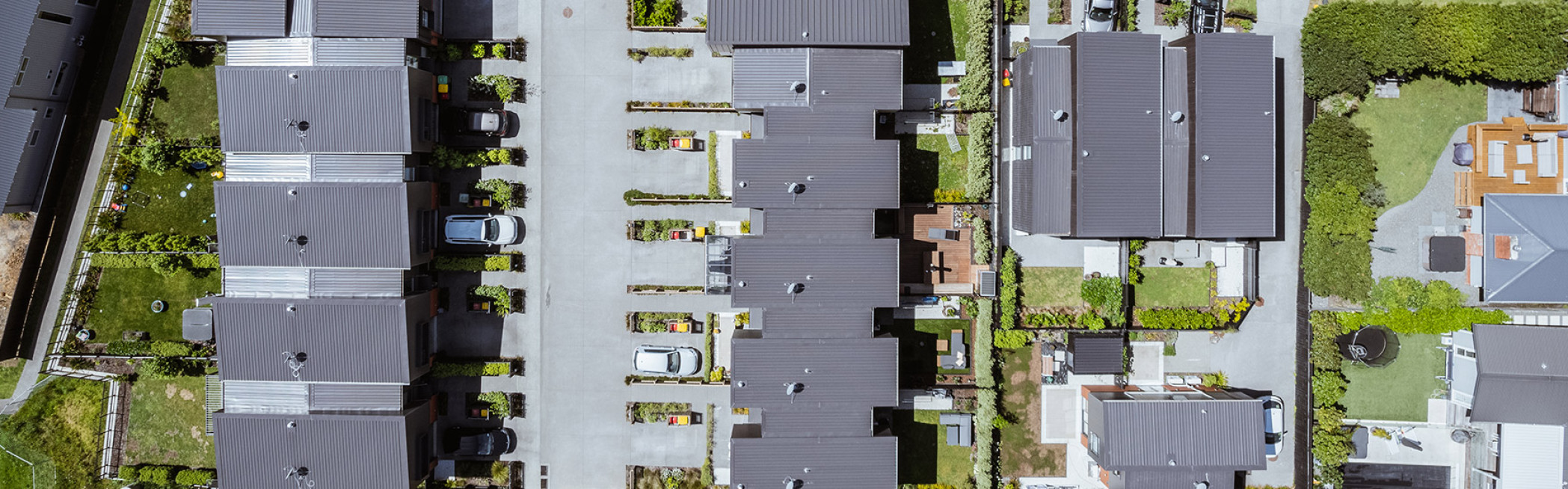
Exterior building materials

- Pic: APN Ltd
Consider building materials that come from sustainable sources, contribute to energy efficiency, and don't harm human health.
Exterior building materials include materials for roofing and cladding, walls (including framing), foundations, and window/door frames.
Some materials may release emissions which can harm human health, either during manufacture or after they are installed. Some come from sustainable sources. Some can be recycled or reused. Some may be more durable or more suitable than others for your climate and home design.
Often, choosing materials is about balancing these factors. For some, sourcing and sustainability is more important; for others it may be durability or recyclability and cost is a factor for most people. The best thing you can do is be informed about what you are using and make the choice that fits your situation and needs.
Exterior building material options
A range of materials to consider for exterior structure includes:
- Timber - framing, weatherboards, plywood, glue-laminated members, whole logs for walls, door and window frames.
- Concrete - floor slabs, blocks, AAC (aerated autoclaved concrete), insulated concrete formwork, precast panels, piles, roofing tiles.
- Steel - framing, beams, profiled sheets (roof and wall cladding), roof tiles.
- Aluminium - weatherboards, profiled sheets, door and window frames.
- Zinc-aluminium coated steel - profiled sheets, flashings, roof tiles.
- PVC - weatherboards, window frames, guttering and spouting.
- Copper guttering and flashing.
- Fibre cement - weatherboards, sheets for monolithic claddings and soffits.
- Earth - bricks, rammed walls, living roofs.
- Straw bale.
- Fired brick and clay - walls, wall veneers and roof tiles.
- Natural stone - wall veneers.
Toxicity, emissions and air quality issues
Timber preservation treatment
The most common way to show compliance with the Building Code for timber durability is to follow Acceptable Solution B2/AS1. This requires radiata pine and in some cases, Douglas fir used for structural purposes to be treated. This treatment involves a range of chemicals which may have effects on the environment and on human health. These effects can occur during processing, during handling and construction, and when timber and processing wastes are disposed of.
Check the Standards New Zealand website for NZS 3640:2003 which sets out accepted preservative treatments for different hazard classes and lists the chemicals they contain.
Common chemical treatments for structural framing within the building envelope are:
- Boron - boron salts protect against insects and mould; the chemicals are not permanently fixed so can leach out if the timber gets wet.
- There are some situations where untreated Douglas fir can be used - in specified low risk designs (find out more on the Ministry of Business, Innovation and Employment, Building and Housing information website).
New water-borne azole treatments are likely to be introduced during 2012.
Common treatments for exterior cladding and joinery are:
- Light organic solvent preservative (LOSP) - LOSP protects against insects and mould, but will leach if exposed to weather.
- Copper chrome arsenate (CCA) - CCA protects against insects and mould and can cause corrosive runoff if exposed to water and weather.
- Ammoniacal copper quaternary (ACQ) - these chemicals are applied in the same way as CCA, but don't contain arsenic or chromium.
- Copper Azole (CuAz) - copper salts and fungicide carried in water to provide broad protection.
Timber for landscaping and piles in ground contact are treated with higher levels of:
- Copper chrome arsenate (CCA) - CCA protects against insects and decay fungi and can cause corrosive runoff if exposed to water and weather.
- Ammoniacal copper quaternary (ACQ) - these chemicals are applied in the same way as CCA, but don't contain arsenic or chromium.
- Copper Azole (CuAz) - copper salts and fungicide carried in water to provide broad protection.
ACQ and CuAz are both more corrosive when wet. Handling precautions - such as wearing gloves, goggles and a mask, and washing clothes separately must be taken with treated timber and waste.
Some untreated timbers - such as heart cedar and cypress - can be used for some internal framing, cladding and window frames. However, cedar can cause fastener corrosion if it gets wet and some people are allergic to it.
The Level website has information on working with treated timber.
Waste streams
Metal processing can emit gases, contaminated dusts, and liquid wastes containing heavy metal and sediments. On larger manufacturing sites, these waste streams can be treated to extract contaminants for re-use or for fuel; the water is recycled.
Wastewater streams from concrete manufacture/mixing can contain alkaline sediments that will have a detrimental effect on waterways or soil if not diluted and treated. However there are strict rules governing the disposal of alkaline waste in New Zealand.
Cement is an essential ingredient of concrete. Its manufacture uses a lot of energy and significant amounts of carbon dioxide are released into the atmosphere. Energy efficiency will address some of these emissions.
Vinyl chloride monomer, a raw material used in the manufacture of PVC, is made overseas and uses a range of highly toxic ingredients with hazardous production wastes. All PVC-related processing requires tight control to manage emissions.
For more information on managing hazardous wastes during construction, see Minimising on-site pollution.
Recyclability, re-usability and waste minimisation
Recycling options vary around New Zealand for dealing with the large amounts of waste that can be generated from exterior structure materials. Outside the main cities, recycling options for materials other than scrap metal can be limited, depending on your distance from the nearest recycling plant and landfill.
Some materials manufacturers recycle waste back into the manufacturing process to reduce cost and environmental impact. If you choose materials that are reusable or recyclable, you’ll reduce the amount of waste that has to be disposed of in landfills - this can save you money as well as being kinder to the environment.
Treated timber recycling options are very limited due to the chemicals involved. The most common disposal options are sending the timber to landfills or grinding it for use as a boiler fuel. Recycling options for untreated timber include composting, fuel, and re-use in building.
Brick- and concrete-based products can be crushed and reused to replace some natural aggregate used in new concrete, hard fill, roads and driveways, building foundations, and civil works. This reduces the use of natural stone and sand that otherwise may have to be trucked long distances. Glass and porcelain recycling is also an option.
Replacing some of the cement in concrete with waste products such as fly ash and slag (by-products of coal and steel processing) helps to reduce environmental impacts and emissions from cement manufacture and efficiently utilises waste from other production processes.
Steel is fully recyclable in New Zealand, where scrap metal is processed into a range of building products. Steel manufacturers also recycle metal waste back into the manufacturing process. By-products of steel processing are on-sold for other uses - such as slag for roading, argon gas for welding, and regenerated acids for conversion into pigments for paint.
PVC recycling is limited, particularly for building products - check what is available in your area as some processors will accept small quantities of specific PVC products.
Also, wall coverings made with vinyls, latex or other synthetic materials will be difficult to recycle.
Sourcing
If you choose locally sourced materials, there’ll be less need for transportation, and it’ll also be easier to find out how the product is made and performs in local conditions.
Imported materials can be harder to assess for environmental compliance - although some imported materials may have a higher recycled content and better functionality than locally sourced.
Consider:
- looking for independent environmental labels such as Environmental Choice New Zealand
- looking for evidence that the manufacturer uses environmental management standards (such as ISO 14001, Enviro-Mark') and systems (such as Zero Waste, EBEX 21, and The Natural Step).
- how much effort the relevant industries are putting into environmental management, natural area regeneration, and minimising effects on local communities
Many materials used for exterior structures are made in New Zealand. PVC, bauxite for aluminium, some structural steel, some fibre cement, gypsum plaster and aerated concrete blocks are imported. Most bricks and many clay roof tiles used in New Zealand are imported from Australia.
Sustainability and life-cycle
Impact of extraction and processing
To maintain resource availability, look for products that:
- are sustainable - they use renewable raw materials that can be regenerated naturally to replace those used
- are biodegradable over time
- have a recycled or reused component
- if they aren't based on renewable resources, are instead based on raw materials that are managed with a long term view, and with efforts to regenerate any mined areas to manage their impact on the environment.
To reduce environmental impacts on land and waterways, look for manufacturers that restore any natural areas the extraction process affects.
The New Zealand Forest Owners Association now has a national industry standard for sustainable plantation forest management. The international Forest Stewardship Council (FSC) also certifies some plantations in New Zealand and elsewhere against internationally prescribed standards.
Ensure any timber you choose is from a sustainably managed source (look for FSC certification, or certification that the timber was harvested under a MAF-approved sustainable management plan - see Decking and outdoor furniture for more information on certification schemes).
Concrete, metals, earth, clay, and fibre cement are largely based on local, non-renewable but plentiful extracted raw materials. The main challenge is managing the health of waterways and restoration of land affected by extraction.
PVC and polystyrene are based on processing petroleum by-products and chemical compounds in highly controlled hazardous processes.
Energy management during extraction/processing
All building products need energy to extract/process or manufacture them. It’s important to balance the amount of energy used in the extraction/processing/manufacturing process against the energy savings and health benefits from the finished material (i.e. a material that uses a lot more energy in its manufacture might save energy during the life of your home by reducing the need to heat or cool).
Manufacturing metals takes a lot of energy, but over half of that energy may be supplied through co-generation (conversion of waste heat from manufacturing into electricity).
Efficiency and functionality
The combination of site, climate and house design will determine the best options for a durable, strong exterior structure. A home that looks good in a magazine might not be right for your circumstances.
Often a combination of materials for the exterior structure will do the job - framing, foundations, roof and cladding can all be made from different materials.
Energy efficiency
Think about how the total system will provide benefits to you in terms of how energy efficient your home will be (See Construction systems to find out more about different options). The more your home absorbs and retains heat, the warmer it will be and the less heating you will need.
Straw is a great material for high insulation performance. Aerated concrete has some good insulation properties, but may need additional insulation in some climates. PVC and timber have good thermal efficiency when used in window frames.
Systems based on earth, concrete, timber and metal framing all require insulation to retain heat.
Earth and concrete wall and floor systems have high thermal mass which can absorb heat when exposed to direct heat sources - but they require insulation to stop the heat escaping.
Durability
Having a durable structure means considering:
- Efficiency of use - if it lasts longer, less material is needed for replacement, and the availability of raw materials can be extended. This doesn't mean that eventual disposal of materials is less important.
- Natural durability - some materials need to be treated in some way to improve long-term durability. Kiln-dried pine and naturally durable exotic timbers such as macrocarpa, larch, lawson cypress and Douglas fir can be used untreated as framing in specific areas where there is no risk of moisture. Check potential toxicity, durability, disposal and ease of use of any treatment system.
- Design for durability - use of eaves, flashings, and foundations ('good hat and good boots') to protect from wind, rain and corrosive elements will minimise the risks from deterioration. Good design is preferable for extending the life of any building material.
- Weathertightness - ensure the cladding or wall system provides a weatherproof skin that won't leak internally, allows moisture to drain, and will dry readily.
Maintenance
When you're choosing building materials, think about:
- whether you'll need to use treatments, finishes and coatings for protection against moisture and insects
- whether you'll need to use (and, if so, how you'll dispose of) maintenance products that are potentially harmful to you, or the environment
- whether regular maintenance will be needed for ongoing durability - this is especially important in corrosive climates
- whether the roofing material is approved for water collection.
More information
From Smarter Homes
- Construction systems
- Materials overview
- Decking and outdoor furniture
- On-site waste minimisation
- Minimising on-site pollution
From ConsumerBuild
From other sites
Building regulations
The Ministry of Business, Innovation and Employment, Building and Housing website has information about weathertightness and building regulations. In particular, check where to use treated timber - look for 'Pink is tough', a quick guide to requirements for enclosed framing, and for information on selecting timber for weathertightness.
Choosing materials
Ecospecifier is an Australian website with guidelines about selection of healthy building products and materials.
The Building Biology and Ecology Institute's website offers course and publications on natural building materials.
The former Waitakere City Council's website has a series of guidelines, including:
- Building materials (PDF 85KB)
- Timber (PDF 227KB
Handling materials
The Occupational Safety and Health Service's website has information about safe handling practices for treated timber and other materials - see bulletin 'Working with timber treatment chemicals'.
Waste minimisation
BRANZ's REBRI (Resource Efficiency in Building and Related Industries) web page have information on re-use and recycling options for building wastes.
The Waste Management Institute of NZ has information about waste exchanges.
Information about specific materials
The Good Wood Guide web page has useful advice on environmentally friendly timber purchasing. Greenpeace also has an online Good Wood Guide which tells you which woods are certified sustainable and which products and furniture are made from environmentally responsible sources.
The NZ Forest Owners' Association's website has details about sustainable forest management standards.
The Ministry of Agriculture and Forestry website has information on illegal logging.
The New Zealand Timber Preservation Council website has information about timber treatments, including quality assurance standards (WOODmark') for processing plants.
The Rain Forest Alliance website has information about certification systems.
The Forest Stewardship Council website has information about FSC certification.
The Cement and Concrete Association website has extensive information to help with concrete choices.
The Plastics New Zealand website has information about plastic recycling and sustainability.
The National Association of Steel-Framed Housing website has contact details for further technical and training information for building with steel.
Technical information
You can buy copies of New Zealand Standards for: use of treated and untreated timber framing; concrete production; design and construction of concrete structures; and earth buildings from the Standards New Zealand website.