

Timber construction

- Pic: APN Ltd
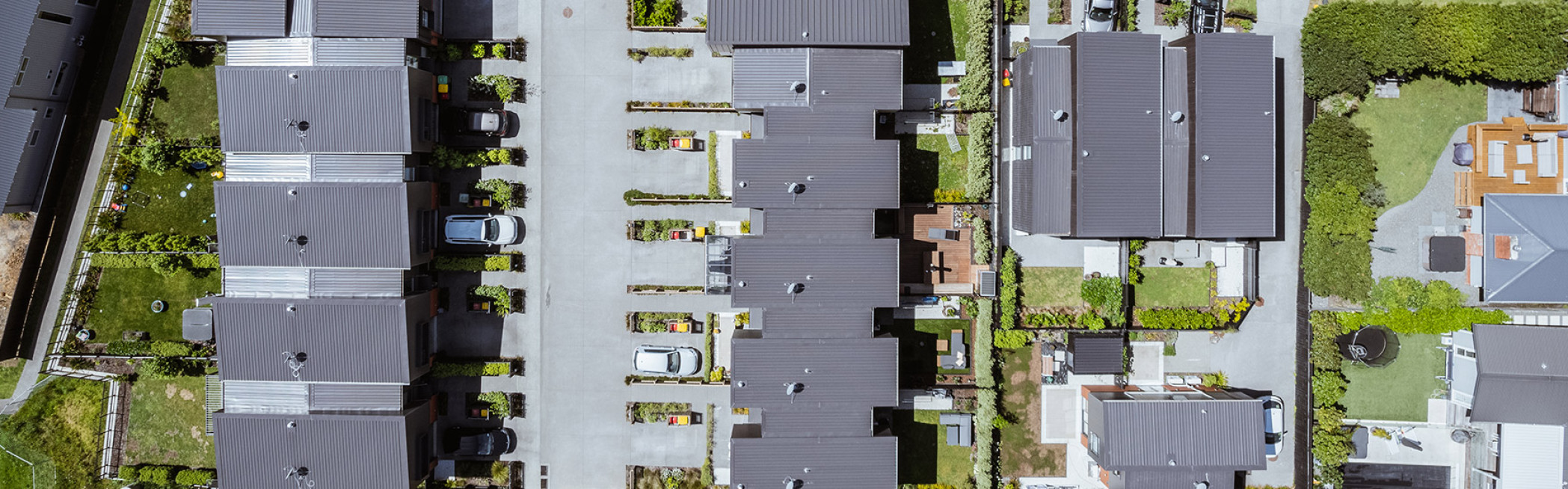
Timber framing is the most common home construction system in New Zealand.
Timber-frame construction is:
- lightweight and strong
- familiar to architects, designers, builders and building control officers
- reasonably priced
- generally made from sustainably grown local materials.
Timber framing is New Zealand’s traditional method of house construction. As a result people think of timber first, even though other construction systems may offer other advantages.
There are several forms of timber construction, including timber framing, post and beam, and solid timber.
Key features of timber construction
Cost
Timber construction is likely to be an economical option for most home building for the foreseeable future. For many situations it will be the cheapest option.
Ease of construction
Timber construction is familiar to the majority of building professionals and to building control officers. A timber house can be built by one or two people using simple tools. Alterations are generally easily made.
Durability and weathertightness
If timber is kept dry it will last for a long time. However, untreated or low-level treated timber can rot if it’s allowed to stay damp for prolonged periods. To meet Building Code requirements for durability, you’ll have to use treated timber for framing in most circumstances. Check with your designer or local council.
Paint or stain coatings need to be in good condition to help prevent timber deteriorating.
Water will inevitably get through cracks and gaps in timber construction systems. The design should allow the water to drain or evaporate away.
Earthquake-resistance
Timber-framed houses are lightweight and, with bracing, strong enough to withstand common magnitude earthquakes with relatively little damage.
Fire resistance
Timber will char and then burn, so any source of high heat must be kept away from it.
Pest resistance
Damp, untreated timber is attacked by borer beetles, but is not eaten by other vermin.
Is it compatible with passive design?
Timber does not conduct heat well so acts to some extent as thermal insulation. However, additional insulation is needed in help keep temperatures at a comfortable level.
Timber is also relatively poor at absorbing and retaining heat. To add thermal mass, you’ll need concrete, masonry or some other heavy, dense material in combination with the timber.
Timber construction - especially timber framing - doesn’t provide particularly good sound insulation.
With timber construction, doors and windows can be placed where needed to make maximum use of the sun’s warmth and breezes for cooling.
Is it right for my site?
Topography and site impact
Timber is a lightweight construction material. It can be used on sloping sites to minimise site excavation.
Climate
Timber homes are used in all climate conditions.
Types of timber construction
Light timber framing
Light timber framing typically uses timber for:
- framing for exterior and interior walls
- floor and ceiling joists
- lintels across door and window openings
- roof trusses or rafters.
The house may be supported on timber or concrete piles, and have timber floors, timber weatherboards, and even timber shingles on the roof.
The timber frame is covered with a weatherproof cladding on the outside. The interior is covered with interior lining or wall-board.
The gaps between the framing allow some insulation to be installed.
Plumbing and electrical cables are easily routed through holes drilled in the timber.
Roof trusses are now usually manufactured off-site, but wall framing may still be built on-site.
Post and beam construction
Post and beam construction means using vertical posts supporting horizontal beams which carry the roof. This gives an open plan with very little obstruction of the interior space.
This also allows the roof to be built quickly, providing shelter for construction of exterior walls, partitions and fittings.
Post and beam is often used with mud brick or straw bale construction.
Sufficient bracing is extremely important with post and beam construction.
Solid timber homes
Houses can be built from solid timber. Some are ‘log cabin’ style. Others use thick timber planks which lock together.
There is no need for separate weatherboards and interior lining since the timber is solid.
Solid timber is a reasonably good insulator, but not as good as bulk insulation materials. To improve insulation, some solid timber construction now includes a layer of insulation in the middle of the planks.
The exterior needs to be weather-proofed with a cladding (such as aluminium sheathing), paint, or stain.
Solid timber homes are stronger than light timber-framed homes. Several examples of this construction were among the few homes to survive the cyclone which devastated Darwin in Australia’s Northern Territory in 1974.
Solid timber construction uses more timber than light timber framing, but less cladding and interior lining materials.
Pole houses
Houses can be built on steeply sloping sites using poles to support the building. The poles are usually ‘telegraph poles’ or thinner square posts.
This allows building with minimal disturbance of the ground and existing vegetation.
In some hilly areas of New Zealand it is common to see houses, garages and car pads supported on poles.
The poles must be treated to withstand rot as it would be very difficult to replace them.
Timber flooring
Timber floor construction consists of timber joists covered with floorboards or particle board panels.
Insulation must be installed under the ground floor as some heat escapes through the floor.
Sub-floor ventilation needs to be sufficient to keep moisture levels down; otherwise damp can rise into the house. A layer of polythene sheeting on the ground also helps to reduce this.
Timber flooring is lightweight and can be useful for sloping sites where heavyweight construction may require excavation.
Timber piles
Timber piles can be used to support floor joists or external walls. They need to be firmly concreted into the ground to prevent any settling. Timber in contact with the ground will get wet, so it must be treated to withstand rot.
More information
From Smarter Homes
- Materials
- Light steel frame construction
- Concrete construction
- AAC construction
- Straw bale construction
- Earth construction
- Insulated concrete formwork
- Construction site practice
- Exterior design
- Passive heating
- Passive cooling
- Insulation
From ConsumerBuild
- The Building Act
- Leaky buildings; this includes information about building for weathertightness
- Construction
From other sites
The Department of Building and Housing’s website has information about building law and compliance, including the Building Code, and on weathertightness.
All home construction needs a building consent from a building consent authority (usually your local council). ConsumerBuild’s Council finder web page has contact details for New Zealand local authorities.
You can buy New Zealand Standards relating to various construction systems from the Standards New Zealand website.
You can buy BRANZ publications about construction systems from the BRANZ website (click on the link to the BRANZ bookshop).